

Homophonic Madness: Why French Tongue Twisters Sound Like a Glitching Record
How centuries of sound erosion created five identical pronunciations for completely unrelated concepts.
01. The Etymological Journey of Five Words into One Sound
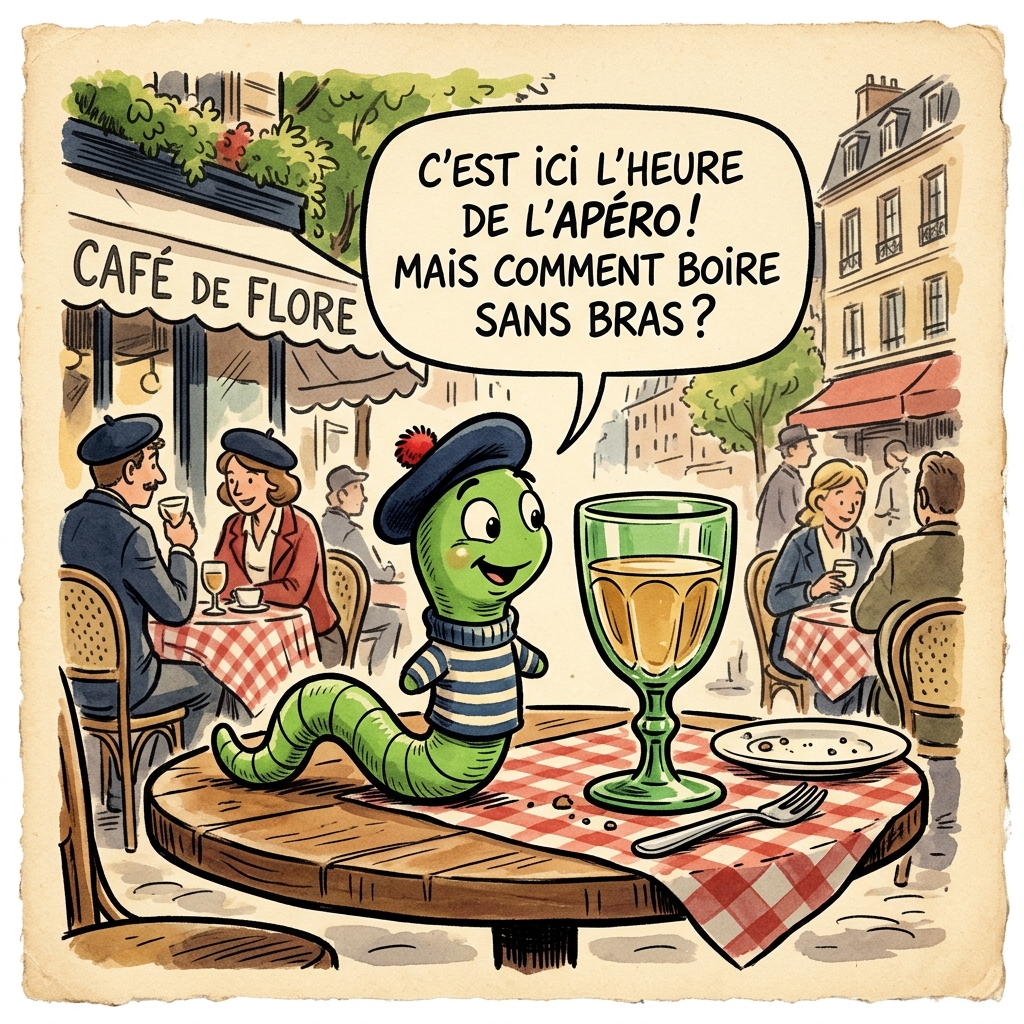
In classical Latin, each of these words possessed distinct syllables and endings: vermis (worm), viridis (green), vadit (goes), versus (towards), and vitrum (glass). As Old French developed through medieval centuries, unstressed vowels dropped and final consonants silenced.
By the Modern French period, all five words converged on the exact same single phonetic syllable /vɛʁ/ (with 'va' acting as the slight /va/ vowel shift in between).
Le Virelangue
A tongue twister specifically designed to exercise muscle memory and vocal agility.
L’Homophone
Words sharing the same auditory pronunciation despite totally different meanings.
Le Contexte
The syntactic sentence structure that tells your brain you are drinking wine, not worms.
02. Other Classic French Tongue Twisters to Practice
- “Les chaussettes de l'archiduchesse sont-elles sèches, archisèches ?” (S-sound vs CH-sound agility).
- “Un chasseur sachant chasser sans son chien est un bon chasseur.” (Hunting without his dog).
- “Panier piano, panier piano, panier piano...” (Say it 10 times fast!).
03. How to Train Your Tongue Muscles
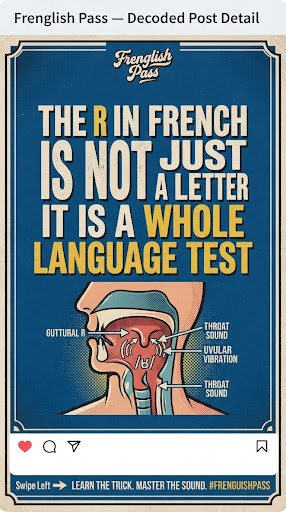
Say the sentence at 25% speed, deliberately over-enunciating the open /ɛ/ vowel sound. Gradually speed up only once each repetition is completely crisp.
Want to experience native French fluently?
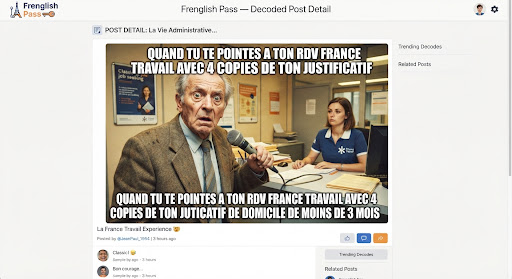
In the Frenglish Pass Adult Course, we dive deep into real native expressions, street slang, bistro banter, and everyday paperwork survival without tears.